
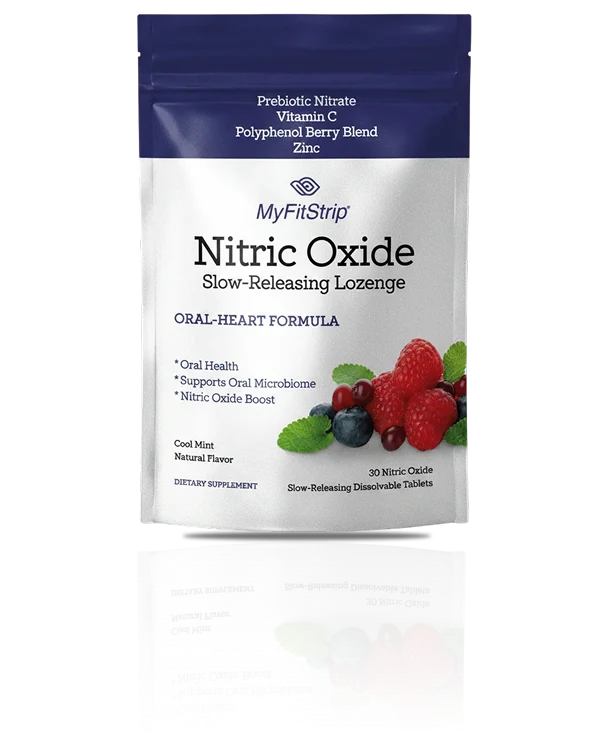
New study from University of Maryland Dental School to report in a leading biomedical journal
Summary of clinical study:
Gingival inflammation is an early manifestation of periodontal disease and is closely tied to disruptions in the oral microbiome. This randomized, placebo-controlled trial (30 patients) assessed the impact of a prebiotic nitrate-enriched chewing gum on gingival health and microbial composition over a 21-day period in healthy adults with baseline gingival bleeding. Thirty participants were randomized to receive either a prebiotic nitrate-vitamin C-zinc citrate formulated chewing gum (~1.9 mmol nitrate) or a placebo gum daily. The prebiotic nitrate group experienced a statistically and clinically significant reduction in modified Bleeding on Probing (mBOP) from 25.7% to 15.3% (p = 0.0002), alongside increases in salivary nitric oxide levels (p = 0.013) and oral pH (p = 0.009). Microbiome analysis revealed consistent enrichment of nitrate-reducing commensals (Rothia mucilaginosa, Neisseria spp.) and suppression of nitric oxide-sensitive pathogens (Prevotella, Fusobacterium, Porphyromonas gingivalis). These changes mirror the microbial and clinical effects observed with systemic dietary nitrate supplementation, suggesting that prebiotic nitrate chewing gum provides a convenient, low-dose, localized delivery method to promote oral eubiosis and reduce gingival inflammation. This study supports the potential of nitrate-based oral prebiotics as adjuncts in periodontal care.
Key Summary Points
• Clinically Meaningful Inflammation Reduction:
A 21-day intervention with prebiotic nitrate gum led to a 40% reduction in gingival bleeding (mBOP: 25.7% → 15.3%, p = 0.0002), compared to no change in the placebo group.
• Microbial Remodeling Toward Eubiosis:
Gum use increased health-associated nitrate-reducing bacteria (Rothia mucilaginosa, Neisseria elongata) and decreased NO-sensitive, inflammation-associated pathogens (Porphyromonas, Prevotella, Fusobacterium).
• Enhanced Biochemical Resilience:
Salivary NO levels and pH significantly increased, suggesting a more alkaline and anti-inflammatory oral environment less favorable to dysbiosis.
• Response Predictability and Mechanistic Insight:
High clinical responders exhibited larger shifts in prebiotic nitrate-reducing microbes and greater improvements in salivary NO and pH, supporting a dose–response relationship and the potential for personalized microbiome-guided therapy.
• Low-Dose, Localized Alternative to Dietary Interventions:
Microbiome and oral health clinical benefits were comparable to beetroot juice and dietary nitrate interventions but achieved with lower dosing and possibly improved compliance through a convenient chewing gum format. Further studies are warranted to assess systemic benefit. At a minimum, improved nitric oxide associated microbiome with periodic chewing may enhance current dietary and clinically supported nitric oxide supplementation